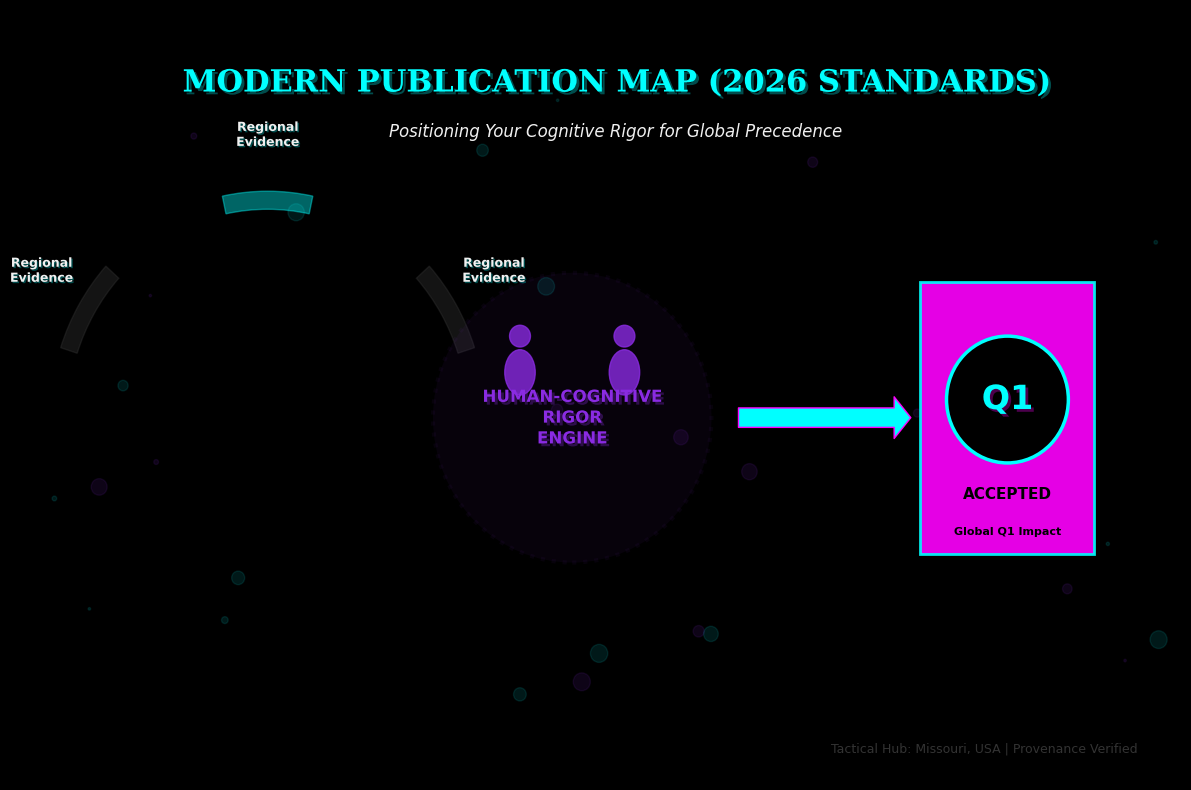
To secure a Q1 publication in 2026, researchers must shift from an "author" mindset to an "editor" mindset, prioritizing risk management and citation potential. Success depends on moving beyond technical accuracy to demonstrate "Active Authority," ensuring the manuscript identifies a gap that generates global urgency rather than just reporting local data. Referencing in modern research has evolved into a dynamic, blockchain-verified ecosystem where citations track real-time impact and the digital provenance of every idea.
Most researchers view a Journal Editor as a final exam grader. They think if they get enough "answers" right, they pass. In reality, a Q1 Editor is more like a high-stakes curator. Their job isn't just to publish good science; it’s to build a cohesive, prestigious, and highly citable "collection" of knowledge.
If you want to stop getting desk-rejected, you need to understand the three invisible questions every editor asks before they even look at your data.
1. Is This a "Conversation Starter" or a "Conversation Closer"?
An editor’s primary fear is publishing a paper that is technically perfect but utterly boring.
The Author’s view: "I have filled a small gap in the literature regarding X."
The Editor’s view: "Will anyone cite this? Does this open a new door for other researchers to walk through?" In 2026, journals are looking for generative research. If your paper concludes a topic so thoroughly that no one needs to study it again for 10 years, it might be a great report, but it’s a poor "investment" for a journal’s impact factor. You must frame your work as a catalyst for future citations.
2. Can I Defend This to My Board?
Editors are under immense pressure regarding Methodological Integrity. With the rise of AI-homogenized papers and "paper mills," editors are hyper-sensitive to "Vague Rigor." When an editor scans your methodology, they aren't looking for complexity; they are looking for vulnerability. They want to see that you’ve addressed your limitations so clearly that the journal's reputation is protected if someone tries to debunk you. If your methodology feels like a "black box," the editor will reject it to avoid the risk of a future retraction.
3. Does This Paper Have "Academic Swagger"?
This isn't about arrogance; it’s about Positioning Authority. Editors can tell within the first three paragraphs if an author is a "student" or a "scholar."
Student Tone: "Previous studies have said X, and we also found X." (Passive/Derivative)
Scholar Tone: "While previous studies have focused on X, they have overlooked the critical variable of Y. Our study recalibrates this framework." (Active/Authoritative) The "Scholar Tone" makes the editor feel safe. It tells them that you understand the global landscape and that you are a leader in your niche.
The Editor’s 60-Second "First-Pass" Audit
Before your paper is sent to reviewers, it must survive the "The Audit." In 2026, editors follow this mental checklist:
The Abstract Hook: Does it promise a "Global Urgency" or just a "Local Result"?
The "Freshness" Check: Are the references from 2024–2026, or is the author citing their own 2015 work repeatedly?
Visual Clarity: Are the Python-generated charts publication-ready, or do they look like Excel defaults?
Conclusion: The Shift from "What" to "So What?"
The biggest difference between a rejected paper and an accepted one is the answer to the question: "So what?" You might have found that a specific protein reacts a certain way, or that a specific law in the Gulf affects trade. But the editor needs to know why that matters to a reader in London, Beijing, or New York. When you start writing for the Editor’s anxiety (Risk) and the Editor’s ambition (Citations), your acceptance rate will skyrocket.