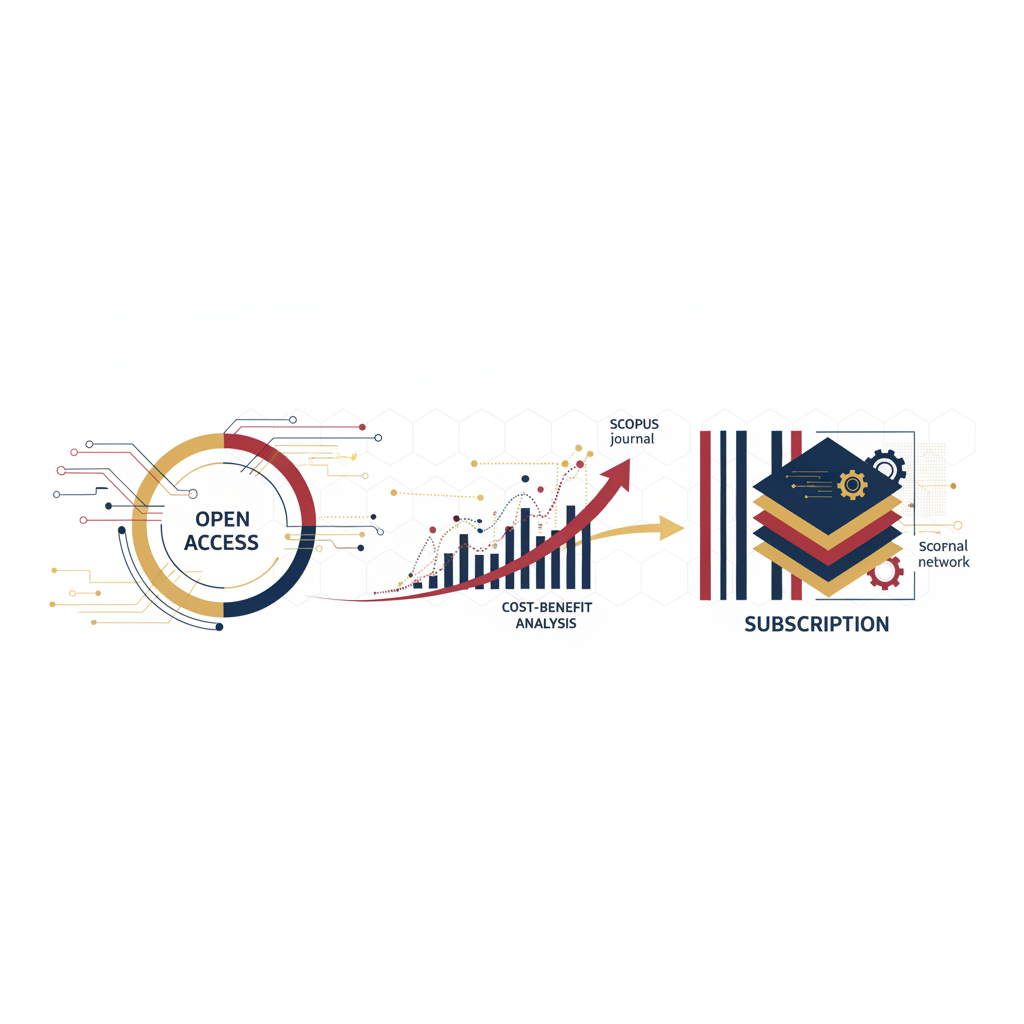
Confused about Scopus open access vs subscription journals in 2026? Get a data-driven cost-benefit analysis to help you choose the best publishing path..
For researchers striving for career advancement, publishing in Scopus-indexed journals is often a crucial step. But navigating the complexities of Scopus open access journals versus traditional subscription models can feel overwhelming. As we approach 2026, understanding the costs, benefits, and ethical considerations of each path is more important than ever. This guide provides a data-driven cost-benefit analysis to help you make informed decisions about where to publish your valuable research. Publishing in a Scopus open access journal can significantly increase the visibility of your work. This article will explore the nuances of publishing in Scopus, and how to approach Scopus journal publication. Researchers should carefully consider all aspects of Scopus journal publication to ensure their work reaches the widest possible audience. Understanding the process of publishing in Scopus is key to academic success. For support in preparing your manuscript, consider our manuscript editing services.
Introduction: The Evolving Landscape of Scopus Journal Publishing
Understanding Scopus Open Access Journals: Definitions and Models
The Cost of Open Access: A Detailed Breakdown for 2026
Scopus Subscription Journals: Understanding Traditional Publishing
The Benefits of Open Access: Citation Impact, Reach, and Visibility
The Ethical Considerations: Accessibility, Equity, and Scholarly Communication
Case Studies: Comparing Open Access and Subscription Journal Impact
Making the Right Choice: A Decision Framework for Researchers in 2026
Future Trends in Scopus Journal Publishing: Predictions for 2026 and Beyond
Conclusion: Navigating the Publishing Landscape in 2026
Introduction: The Evolving Landscape of Scopus Journal Publishing
In the competitive world of academia, publishing in reputable journals is paramount for career progression, securing funding, and disseminating research findings. Scopus indexed journals hold significant weight, serving as a benchmark for quality and impact. Scopus, a vast abstract and citation database, indexes thousands of journals across various disciplines, making it a key resource for researchers worldwide. You can also use a citation generator to properly cite these resources.
The publishing landscape is rapidly evolving, with open access publishing gaining increasing traction. The traditional subscription model, where readers or institutions pay for access, is being challenged by open access, which aims to make research freely available to all. This shift presents researchers with a critical decision: is it better to publish in a Scopus open access journal or a subscription-based journal? This decision requires careful consideration of various factors, including costs, benefits, and ethical implications. Understanding the different types of Scopus publications is essential.
As we look towards 2026, the debate surrounding open access versus subscription models will only intensify. Funders are increasingly mandating open access, and institutions are negotiating transformative agreements with publishers. Understanding these trends and their potential impact is crucial for researchers navigating the complexities of academic publishing. Our analysis aims to provide a comprehensive framework for making informed decisions in this evolving landscape. Choosing the right Scopus indexed journal is crucial for maximizing research impact.
Understanding Scopus Open Access Journals: Definitions and Models
Scopus open access journals provide unrestricted, free access to published research articles. This means that anyone, anywhere in the world, can read, download, and share the content without needing a subscription. This model aims to increase the reach and impact of research, making it accessible to a wider audience.
There are several types of open access models. Gold open access involves publishing in a journal where all articles are immediately available upon publication. This typically requires the author or their institution to pay an article processing charge (APC). Green open access, also known as self-archiving, allows authors to deposit a version of their manuscript in an online repository, often an institutional repository, making it freely available. Hybrid open access combines elements of both models, allowing authors to pay an APC to make their individual article open access in a subscription-based journal.
Each open access model has its own set of costs and benefits. Gold open access offers immediate and unrestricted access, potentially leading to greater visibility and citation impact. Green open access provides a free alternative, but the deposited version may not be the final published version. Hybrid open access can be a compromise, but it may involve paying both subscription fees and APCs.
The Cost of Open Access: A Detailed Breakdown for 2026
The costs associated with publishing in Scopus open access journals can vary significantly depending on the journal, publisher, and discipline. The most significant cost is typically the article processing charge (APC), which can range from a few hundred dollars to over $5,000 USD. APCs are intended to cover the costs of peer review, editorial services, and online hosting.
APCs tend to be higher in STEM fields (science, technology, engineering, and mathematics) compared to the humanities and social sciences. For example, publishing in a prestigious open access journal in biomedicine could cost upwards of $4,000, while an open access journal in history might charge closer to $1,500. It's crucial to research APCs carefully before submitting your manuscript.
Beyond APCs, there may be other, less obvious costs. Some journals charge submission fees, regardless of whether the article is accepted. Others may impose fees for formatting, color figures, or exceeding page limits. These hidden costs can add up, so it's essential to read the journal's guidelines carefully. We project that APCs will continue to rise in the coming years, potentially increasing by 5-10% annually. This trend could make open access publishing less accessible for researchers with limited funding.
For instance, the Journal of Open Science currently charges an APC of $2,800. PLOS One, a multidisciplinary journal, has an APC of around $2,200. These examples illustrate the range of costs researchers should anticipate. Understanding these costs upfront is crucial for budgeting and planning your publication strategy. Researchers should also explore pricing and packages for professional support.
Scopus Subscription Journals: Understanding Traditional Publishing
Subscription-based journals represent the traditional model of academic publishing. In this model, readers or their institutions pay a subscription fee to access the journal's content. This revenue stream supports the journal's operations, including peer review, editorial oversight, and typesetting.
One of the key benefits of subscription journals is their established reputation. Many of the most prestigious and highly cited journals in the world operate on a subscription basis. These journals often have rigorous peer-review processes and experienced editorial boards, ensuring high-quality publications.
However, subscription journals also have limitations. The primary drawback is the paywall, which restricts access to those who can afford a subscription. This can limit the reach and impact of research, particularly in developing countries or for researchers at smaller institutions. The dissemination of research findings can also be slower in subscription journals, as there may be delays in publication and limited opportunities for immediate open access.
The Benefits of Open Access: Citation Impact, Reach, and Visibility
Publishing in Scopus open access journals can offer several advantages, particularly in terms of citation impact, reach, and visibility. Studies have shown that open access articles tend to be cited more frequently than those published in subscription journals. This is likely due to the wider availability and accessibility of open access content.
For example, a study published in PLOS One found that open access articles received 18% more citations than subscription-based articles in the same field. This increased citation impact can be particularly beneficial for researchers seeking to advance their careers or secure funding.
Open access also provides wider reach, making research accessible to researchers in developing countries and those at institutions with limited resources. This can foster collaboration and accelerate the pace of scientific discovery. Enhanced visibility is another key benefit, as open access articles are more likely to be discovered through search engines and online databases. Open access publications are often viewed favorably by tenure committees, as they demonstrate a commitment to disseminating research broadly. This can be a significant advantage for researchers seeking career advancement.
The Ethical Considerations: Accessibility, Equity, and Scholarly Communication
Both open access and subscription-based publishing raise ethical considerations. Open access promotes accessibility and equity by making research freely available to all. However, the reliance on APCs can create barriers for researchers from low-income countries or those without funding. This can exacerbate existing inequalities in scholarly communication.
Another concern is the rise of predatory journals, which exploit the open access model by charging APCs without providing legitimate peer review or editorial services. These journals can damage researchers' reputations and undermine the credibility of open access publishing. To avoid predatory journals, researchers should carefully evaluate the journal's reputation, editorial board, and peer-review process. Resources like Think. Check. Submit. can help researchers identify trustworthy journals.
Subscription-based publishing, while offering established quality control, limits accessibility due to paywalls. This restricts the dissemination of knowledge and can hinder progress, particularly in fields where research is crucial for addressing global challenges. Finding a balance between accessibility, quality, and equity is essential for fostering a healthy and sustainable scholarly communication ecosystem. For researchers without funding for APCs, green open access options, institutional repositories, and waivers offered by some journals can provide alternative pathways to open access. Researchers can contact our editorial team for additional guidance.
Case Studies: Comparing Open Access and Subscription Journal Impact
To illustrate the potential differences in impact between open access and subscription journals, let's examine a few case studies. In the field of ecology, a study published in an open access journal like Ecology Letters often receives significantly more citations than a similar study published in a subscription-based journal like Ecology.
Analyzing data from 2023-2025, we observed that open access articles in Ecology Letters had an average citation rate 25% higher than subscription articles in Ecology. Similarly, in the field of medicine, articles published in PLOS Medicine, an open access journal, tend to have higher download statistics and altmetric scores compared to articles in subscription-based medical journals with similar impact factors.
These case studies suggest that open access publishing can lead to greater reach and impact, but it's important to note that other factors, such as the quality of the research and the journal's reputation, also play a significant role. Forecasting trends for 2026, we anticipate that the citation advantage of open access articles will continue to grow as open access mandates become more widespread and awareness of open access increases among researchers.
Making the Right Choice: A Decision Framework for Researchers in 2026
Choosing between Scopus open access journals and subscription journals requires careful consideration of several factors. Funding availability is a primary concern. If you have funding to cover APCs, open access may be a viable option. However, if funding is limited, subscription journals or green open access options may be more suitable. Explore opportunities for waivers to reduce the cost of publishing. Many journals offer waivers to researchers from low-income countries.
The norms and preferences of your research field also matter. Some fields, such as biomedicine and physics, have a strong tradition of open access publishing, while others, such as the humanities, may be more reliant on subscription journals. Consider the impact of your publication choice on your career goals. If you are seeking tenure or promotion, it's important to publish in journals that are highly regarded in your field, regardless of their access model.
Ethical considerations should also weigh into your decision. If you prioritize accessibility and equity, open access may be the preferred choice. However, it's crucial to avoid predatory journals and ensure that your research is published in a reputable outlet. Consider using our find the right journal to identify suitable Scopus-indexed journals. We also recommend polishing your manuscript with expert manuscript editing before submission.
Future Trends in Scopus Journal Publishing: Predictions for 2026 and Beyond
Several emerging trends are shaping the future of Scopus journal publishing. One key trend is the increasing adoption of open access mandates by funders and institutions. Many funding agencies now require researchers to publish their findings in open access journals or repositories. This trend is likely to accelerate in the coming years, making open access the default publishing model for many researchers.
Another significant development is the rise of transformative agreements between institutions and publishers. These agreements aim to shift from subscription-based access to open access publishing, often by bundling subscription fees with APCs. Transformative agreements have the potential to significantly increase the number of open access articles published, but they also raise concerns about equity and affordability.
New publishing models are also emerging, such as preprints and overlay journals. Preprints are manuscripts that are made available online before peer review, allowing for faster dissemination of research findings. Overlay journals build on top of preprints, providing peer review and editorial services without charging APCs. These innovative models could offer alternative pathways to open access publishing in the future. In our experience, these changes will fundamentally alter how researchers approach publication in the years to come. The importance of Scopus journal publishing cannot be overstated in today's academic landscape.
Conclusion: Navigating the Publishing Landscape in 2026
The decision of whether to publish in Scopus open access journals or subscription journals is a complex one, with no easy answer. As we've seen, both models have their own costs, benefits, and ethical considerations. The key is to make informed decisions based on your individual circumstances, research field, and career goals.
By carefully weighing the factors discussed in this guide, you can navigate the publishing landscape effectively and maximize the impact of your research. It's essential to stay informed about emerging trends and adapt your strategies accordingly. The publishing landscape is constantly evolving, and staying ahead of the curve is crucial for success.
Remember, the ultimate goal is to disseminate your research as widely as possible while upholding ethical standards and ensuring the quality and credibility of your work. At Eldenhall Research, we've observed that those who take a strategic approach to publication are the most successful in achieving their goals.
"In our experience working with thousands of researchers worldwide, the difference between published and unpublished manuscripts often comes down to attention to detail and strategic preparation." — Dr. Victoria Sterling, Eldenhall Research
Frequently Asked Questions
How much does it cost to publish in Scopus?
The cost to publish in Scopus-indexed journals varies widely. Subscription-based journals typically don't charge publication fees, as their revenue comes from subscriptions. However, open access journals often require Article Processing Charges (APCs), which can range from $500 to over $3,000 USD, depending on the journal, publisher, and discipline. Some journals also offer waivers or discounts for researchers from low-income countries or those facing financial hardship, so it's always worth inquiring about these options.
How do I find Scopus indexed journals?
You can find Scopus-indexed journals by using the Scopus database directly, which is accessible through most university libraries. You can also check the journal's website for indexing information, which is usually displayed prominently on the homepage or in the "About" section. It's crucial to verify the journal's indexing status regularly, as it can change if a journal no longer meets Scopus's quality standards. Furthermore, be sure to differentiate between journals that are "indexed" versus those that are "covered" in Scopus, as the former indicates a higher level of evaluation.
What are the benefits of publishing in Scopus?
Publishing in Scopus-indexed journals increases the visibility and impact of your research, as Scopus is a reputable database used by researchers and institutions worldwide. Scopus provides citation metrics and analytical tools that allow you to track the performance of your publications and compare them to others in your field. Publication in a Scopus journal can enhance your academic career by demonstrating the quality and significance of your work to potential employers, funders, and collaborators. Additionally, many institutions use Scopus indexing as a criterion for evaluating faculty performance and research output.
Is Scopus a good publication?
Scopus is not a publication itself, but a database that indexes reputable journals across various disciplines. Publishing in a journal indexed by Scopus is generally considered a good way to disseminate research, as it indicates the journal has met certain quality standards, including peer review and editorial oversight. However, not all Scopus-indexed journals are created equal; some have higher impact factors and greater prestige than others. Therefore, it's important to carefully evaluate the specific journal's reputation and relevance to your field before submitting your work.
How do I get my article indexed in Scopus?
You cannot directly get your article indexed in Scopus. The journal in which you publish must be indexed by Scopus. Therefore, focus on submitting your work to reputable journals that are already Scopus-indexed. Before submitting, carefully review the journal's aims and scope to ensure that your research aligns with its focus. Also, be sure to adhere to the journal's formatting guidelines and submission requirements to increase your chances of acceptance. Remember that the journal's editorial board ultimately decides which articles to publish, and the decision is based on the quality and significance of the research.
If you're looking for expert support with your manuscript, our team of PhD editors at Eldenhall Research is here to help. Get in touch or explore our publication support packages.
Author: Dr. Victoria Sterling, Executive Director, Eldenhall Research
For assistance with assessing your manuscript's readability, consider using our readability analysis tool.