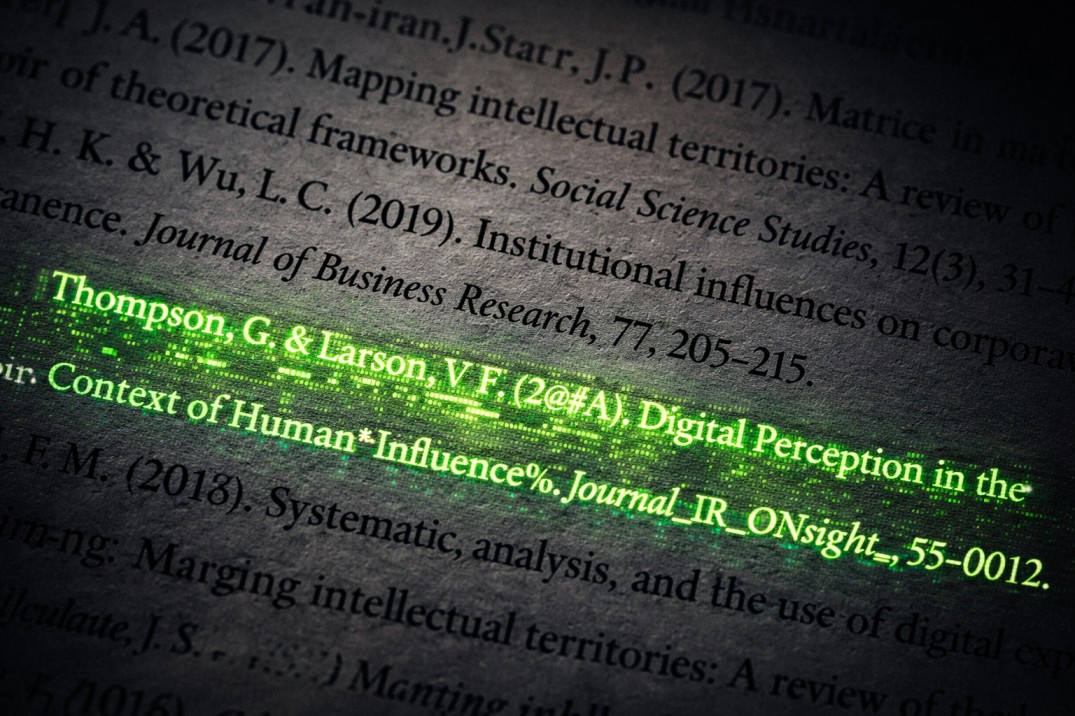
This investigative briefing addresses the most dangerous trap in modern academic drafting: The Hallucinated Citation. Authored by Dr. Victoria Sterling, this article exposes the severe algorithmic penalties awaiting scholars who use generative artificial intelligence to build their literature reviews. Dr. Sterling explains the forensic mechanics of automated reference checking systems used by elite journals, detailing how a single phantom digital object identifier instantly transforms a minor drafting shortcut into a permanent career blacklist for fabricated data.
The most devastating academic errors are often completely invisible to the human eye. When international scholars use generative artificial intelligence to assist with their research, they usually obsess over the tone and the grammar. They spend hours prompting the software to sound perfectly academic. They read the resulting text, see that it flows beautifully, and paste it into their manuscript. What they fail to realize is that they just pasted a ticking time bomb into their bibliography. As the Executive Director at Eldenhall Research, my compliance team audits the rejection data of the most prestigious Scopus Q1 and Web of Science indexed journals. The number one reason scholars are currently being blacklisted for academic misconduct has nothing to do with their primary methodology. They are being permanently banned because their artificial intelligence assistant fabricated a citation, and the journal algorithm caught it instantly. Here is the precise forensic reality of the hallucinated citation, and why failing to manually audit your bibliography will destroy your academic career in 2026. ## The Mechanics of a Digital Hallucination To understand why this happens, you must understand how large language models actually function. These systems are not search engines. They do not look up facts in a secure database. They are highly advanced predictive text engines. When you ask an artificial intelligence tool to summarize the literature on a specific topic, it generates a response by predicting which words statistically belong together. Because academic papers always include citations, the algorithm predicts that it needs to generate a citation. It will invent an author name that sounds plausible. It will invent a journal title that perfectly matches your topic. It will even generate a completely realistic volume number, issue number, and Digital Object Identifier. The resulting reference looks absolutely flawless. It is perfectly formatted in American Psychological Association or Vancouver style. But it is entirely fake. The paper does not exist. The researchers call this a hallucination. In the academic publishing industry, we call it fabricated data. ## The Automated Editorial API Ping In the past, peer reviewers rarely had the time to manually search for every single citation listed at the end of a fifty page manuscript. A fake reference could easily slip through the cracks. In 2026, human reviewers do not check citations. The submission portal does it automatically. When you upload your manuscript to a top tier journal, the publisher software instantly extracts your entire bibliography. It sends an automated application programming interface ping to global registries like Crossref and PubMed. The system attempts to match every single Digital Object Identifier and author name against the master global database. This process takes less than three seconds. If the database pings back stating that your Digital Object Identifier is invalid, or that the specific volume and issue do not exist, the submission portal immediately halts the peer review process. ## The Absolute Penalty for Fabricated Data When the algorithm flags a phantom reference, the Editor in Chief does not assume you made a formatting mistake. They do not assume you were just being lazy with your literature review. Under the strict ethical guidelines of modern publishing, submitting a manuscript with a fake citation is classified as the deliberate fabrication of scientific data. It is the exact same ethical violation as forging clinical trial results or manipulating laboratory images. The journal will instantly reject your manuscript. They will place your name and institutional affiliation on their internal blacklist, permanently barring you from submitting future research. Furthermore, because data fabrication is a severe offense, the publisher is obligated to notify your university ethics board, triggering an investigation that can easily strip you of your funding and your academic position. One single hallucinated citation generated by a digital shortcut will completely erase decades of legitimate scientific work. ## The Eldenhall Forensic Bibliography Audit You cannot trust a digital writing assistant to build your academic foundation. Furthermore, you cannot rely on your own eyes to spot a hallucinated citation, because the artificial intelligence is specifically designed to make the fake data look perfectly authentic. Surviving the editorial screening process requires rigorous, independent verification. This is a core component of the Strategic Architecture we deploy at Eldenhall Research. We do not just polish your grammar. We execute a comprehensive Forensic Bibliography Audit on every manuscript that passes through our administrative board. When our discipline specific doctoral experts review your paper, we strip out your reference list. We manually verify every single citation, every author name, and every Digital Object Identifier against the verified global databases. We ensure that every piece of literature you cite is authentic, peer reviewed, and correctly attributed. If we find a hallucinated reference, we surgically remove it and replace it with a highly relevant, mathematically verified citation from the true academic record. When we attach our United States registered Editorial Certificate to your manuscript, we are legally signaling to the journal that your entire bibliography is unassailable. Protect your career from the fatal trap of artificial intelligence. Secure your manuscript with uncompromising human verification, and submit your research with absolute confidence.