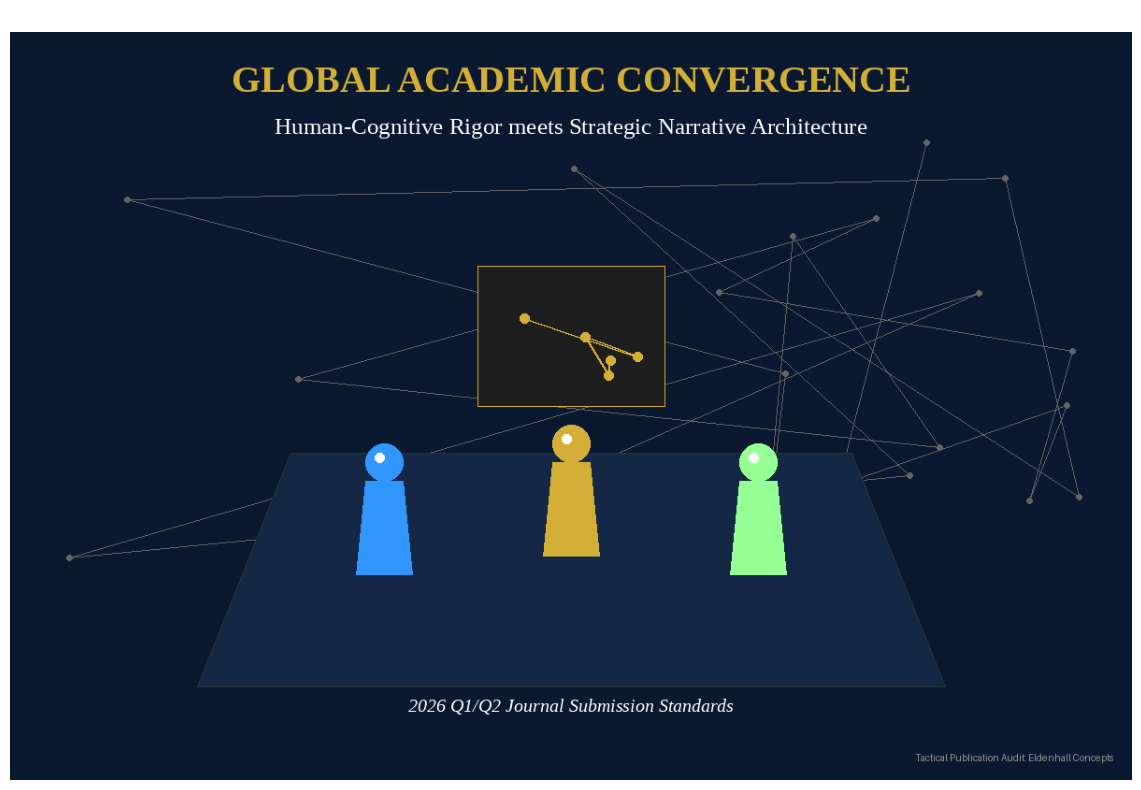
This strategic guide reveals how to overcome "linguistic bias" and structural flaws to prevent immediate desk-rejections from elite Q1 journals. It outlines a blueprint for transforming regional manuscripts into high-impact global publications through native-level calibration and expert data visualization.
In 2026, the global academic landscape is no longer just about the quality of your data; it is about the strategic architecture of your narrative. As the volume of AI-assisted submissions surges, elite Q1 and Q2 journals have implemented more rigorous "First-Pass" filters. To stand out, a manuscript must transcend regional boundaries and speak the universal language of high-impact scholarship.
Here is an expert analysis of the structural shifts required to dominate search results and journal indices this year.
The 2026 Framework: Why Excellence is No Longer Enough for Q1 Success
1. Navigating the "AI-Transparency" Filter
The recent PNAS and Nature editorial updates of 2026 emphasize a critical shift: Journals are now using advanced distributional analysis to detect "homogenized" AI prose. To rank at the top of Google and academic indices, your work must demonstrate Human-Cognitive Rigor. This means moving beyond generic summaries to provide "Active Authority"sentences that don't just report data but argue for its global necessity.
2. Solving the "Linguistic Glass Ceiling"
For international researchers, the most common cause of a "Desk-Reject" isn't a lack of brilliance it's Semantic Friction.
The Error: Direct translation that preserves regional rhetorical structures.
The Solution: Native-Calibration. A paper destined for a top-tier US or UK journal must adopt the linear, deductive logic preferred by Western editorial boards. If your introduction doesn't establish "Global Urgency" within the first 300 words, it is often discarded as "too narrow in scope."
3. Data Visualization as Argumentation
In the current era, static tables are obsolete. High-impact research now requires Conceptual Framework Mapping. Utilizing Python-based libraries like Matplotlib or Seaborn to create publication-quality, symbolic diagrams allows reviewers to grasp your theoretical contribution at a glance. This visual clarity often bypasses the subconscious biases that lead to rejection.
Strategic Checklist for Global Publication
To ensure your research doesn't just exist but leads in its field, audit your manuscript against these three 2026 pillars:
Methodological Transparency: Does your paper provide the "granular data" (algorithms, raw protocols) now required by open-science mandates?
Citation Freshness: Does your literature review include the defining breakthroughs of 2024–2026, or is it a "history museum"?
Rhetorical Swagger: Is the tone passive and apologetic, or does it command the "Academic Space"?
Accelerating Your Impact with Eldenhall Research
Navigating these complexities requires more than a spell-checker; it requires a tactical partner. Based in Missouri, USA, Eldenhall Research serves as a premier global hub for academic excellence. We specialize in:
Native-Level Manuscript Calibration: Elevating regional drafts into Q1-ready masterpieces.
Strategic Editorial Auditing: Identifying "Desk-Reject" triggers before you submit.
International Publication Support: Bridging the gap for researchers in the Gulf, China, and beyond.