Insights
Our latest thinking on the issues that matter most in research and academic publishing.

I Have Reviewed Over 2,000 Manuscripts. Here Is Exactly What Separates the 5% That Get Published.
Most researchers believe that publication success comes down to the quality of their science. After reviewing more than 2,000 manuscripts across 40 indexed journals over 35 years, I can tell you that quality of science is necessary but nowhere near sufficient. The manuscripts that consistently make it through peer review and editorial acceptance share a set of specific, learnable characteristics that have almost nothing to do with how intelligent the researcher is and almost everything to do with how deeply they understand the system they are submitting into. In this article I describe exactly what those characteristics are, drawn entirely from firsthand observation across three decades of manuscript evaluation.
Predatory Journals Are Not the Real Threat to Science. The Way We Measure Research Success Is.
For years, the academic publishing conversation has treated predatory journals as the primary villain in the integrity crisis facing global research. I disagree. After 35 years working inside legitimate indexed institutions, I have come to believe that the metrics obsession inside credible universities and funding bodies causes more long-term damage to science than every predatory publisher operating today combined. Predatory journals are a symptom. The disease is how we define, measure, and reward research success and until we are willing to name that honestly, we will keep treating symptoms while the underlying condition worsens.

The H-Index Was Never Meant to Define a Researcher's Worth. We Used It to Destroy Careers Anyway.
Jorge Hirsch invented the h-index in 2005 as a rough personal tool to compare physicists within a narrow disciplinary context. He explicitly warned against using it across fields, across career stages, or as a standalone measure of scientific contribution. Nineteen years later, universities are using it to deny tenure, funding bodies are using it to allocate grants, and hiring committees are using it to eliminate candidates before reading a single word of their actual research. I have watched this number hollow out the academic profession from the inside. In this article I explain how it happened, what it costs, and why I believe the h-index is now one of the most destructive forces operating quietly inside research institutions worldwide.

Why Non-English Researchers Are Being Silently Filtered Out of Global Science and Why the Publishing World Refuses to Admit It
I have spent 35 years reviewing manuscripts from researchers across Asia, the Middle East, Latin America, and Eastern Europe. What I have witnessed is not a meritocracy. It is a system that rewards proximity to English-language academic culture far more than it rewards the actual quality of the science. In this article, I share what I have seen firsthand, what the data confirms, and why I believe the global research community is losing some of its most important scientific contributions to a bias that nobody in power wants to name out loud.

The Peer Review System Is Quietly Failing Science and Most Academics Are Too Afraid to Say So
After 35 years inside the academic publishing ecosystem as a researcher, reviewer, editor, and advisor to journals across three continents, I can say what most of my peers will not: peer review as we practice it today is structurally broken. It does not consistently identify the best science. It consistently identifies the most familiar science. In this article, I break down exactly how this happened, what it costs the global research community, and what I believe must change, even if the publishing establishment refuses to hear it.
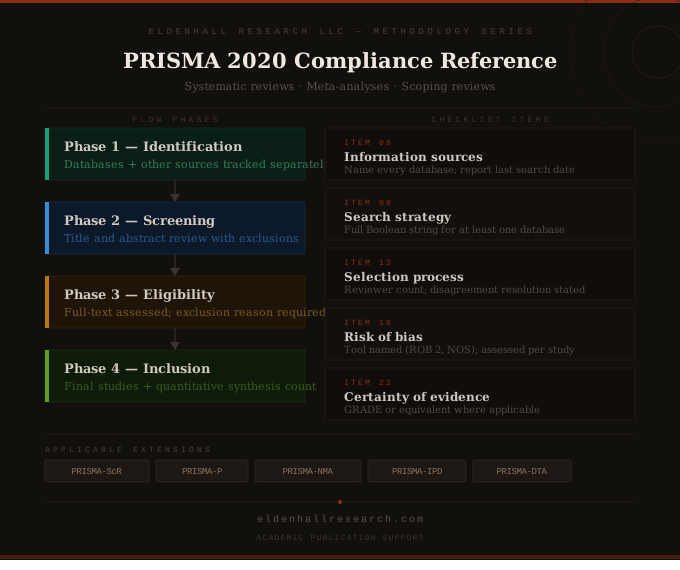
PRISMA Compliance in Research: What It Is, Why It Matters, and How to Get It Right
Systematic reviews earn their authority through transparency. This guide breaks down the PRISMA 2020 checklist, the four flow diagram phases, the five most-failed items, and which extension applies to your study design.

How to Identify a Research Gap: A Systematic Approach for Serious Scholars
Every significant study begins not with a hypothesis, but with an honest reckoning of what the literature does not yet know — and why that absence matters. In this article What is a research gap — and why it matters The five types of research gaps A six-step method to identify research gaps Tools and databases to use Common mistakes researchers make Framing the gap for publication

How to Select the Right Journal for Scopus Publication: A Strategic and SEO-Oriented Guide Introduction
Selecting the right Scopus journal requires scope alignment, methodology fit, citation alignment, and quartile strategy. Researchers should analyze journal publication patterns, recent articles, and methodological preferences before submission. Strategic journal selection increases acceptance probability and reduces desk rejection in Scopus indexed journals.
Why Research Papers Get Rejected: An Analytical Perspective from the Publication System
Why research papers get rejected, journal rejection reasons, Scopus paper rejection analysis, Web of Science journal rejection, academic publishing strategy, research publication strategy, journal selection strategy, research gap in literature review, manuscript rejection reasons, peer review process analysis, publication support services.
Why Most Research Papers Get Rejected: A 20-Year Perspective from the Research Support Industry
Research support services, journal publication support, Scopus publication assistance, research paper writing services, academic editing services, thesis writing support, journal selection service, publication support company, research consultancy, manuscript editing services, PhD publication support, Scopus journal publication help.
Interdisciplinary Research Dominance in 2026
By 2026, interdisciplinary research has moved from a preference to a funding requirement. Over 50% of NSF grants now explicitly require cross-disciplinary teams, and NIH's major programs mandate collaboration across basic science, clinical, data, and community expertise. Single-discipline proposals are largely non-competitive. Universities are restructuring accordingly — creating new interdisciplinary institutes, hybrid faculty roles, and updated tenure criteria. Key skills now expected of researchers include systems thinking, methodological flexibility, and the ability to bridge disciplinary cultures. The main lingering challenge is fair tenure evaluation for interdisciplinary work, though solutions like multi-discipline review committees and contributor credit taxonomies are gaining ground. Bottom line: researchers who combine deep expertise with cross-disciplinary collaboration skills hold a significant career and funding advantage in 2026.
Open Science in 2026: From Mandate to Reality
By 2026, open science has shifted from a voluntary trend to a strict requirement. NIH and NSF now mandate raw data sharing, pre-registration, and open code — with serious consequences for non-compliance, including funding suspension and misconduct investigations. Europe is actively auditing research and has already initiated fraud cases. The payoff is real: open data papers get 31% more citations, publication timelines are faster, and universities like Stanford and MIT now factor open science credentials into tenure decisions. Key challenges remain around privacy-sensitive data and inequality for researchers in low-resource settings, but the overall message is clear — transparency is now the price of entry for credible research.
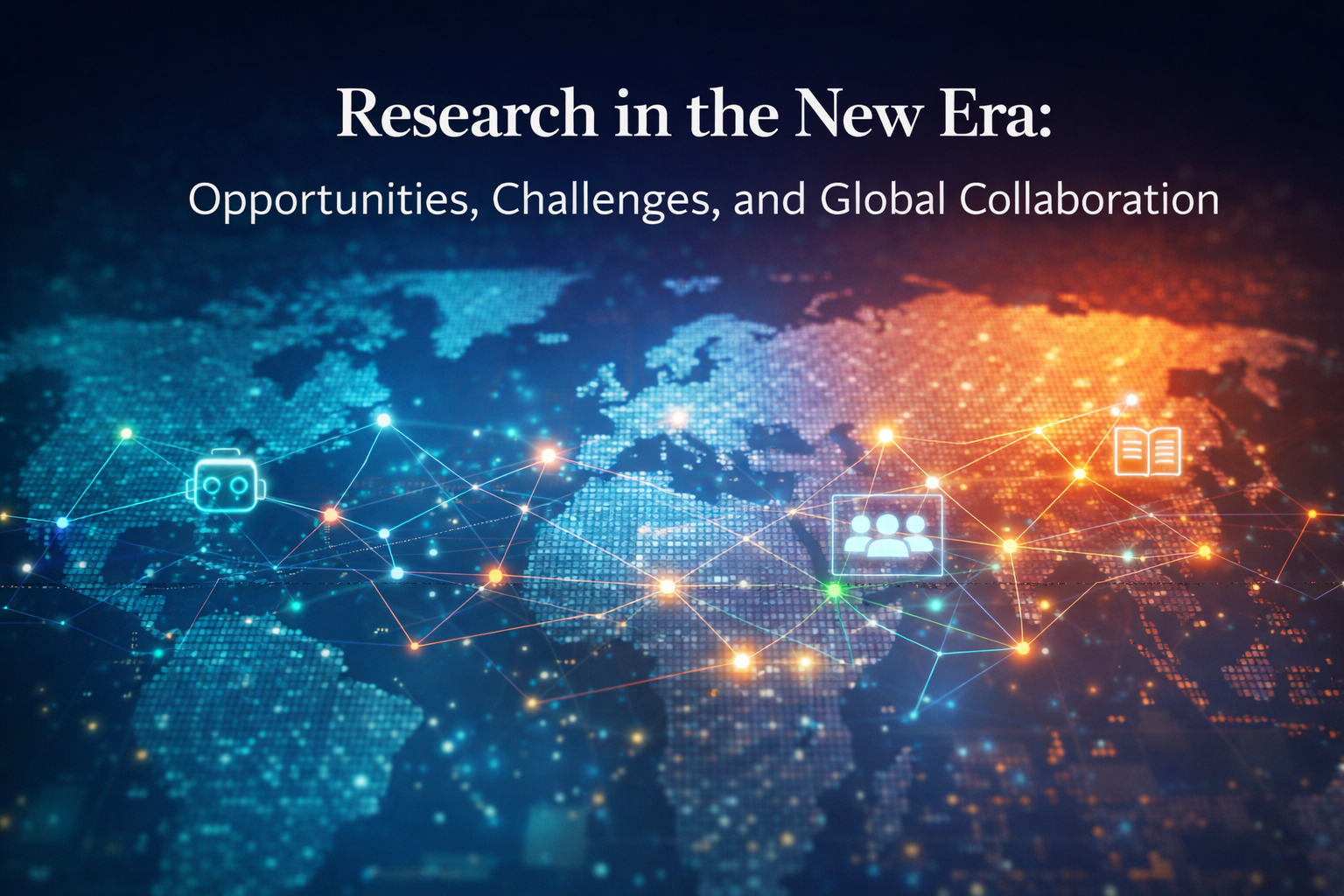
Research in the New Era: Opportunities, Challenges, and Global Collaboration
Research in the new era is defined by technology, artificial intelligence, and global collaboration. Researchers today have access to digital tools, online journals, and virtual collaboration, making research faster and more connected than ever. However, challenges such as publication competition, research ethics, and identifying quality journals remain important. The future of research belongs to those who adapt to new technologies, collaborate globally, and focus on meaningful, ethical, and impactful research.
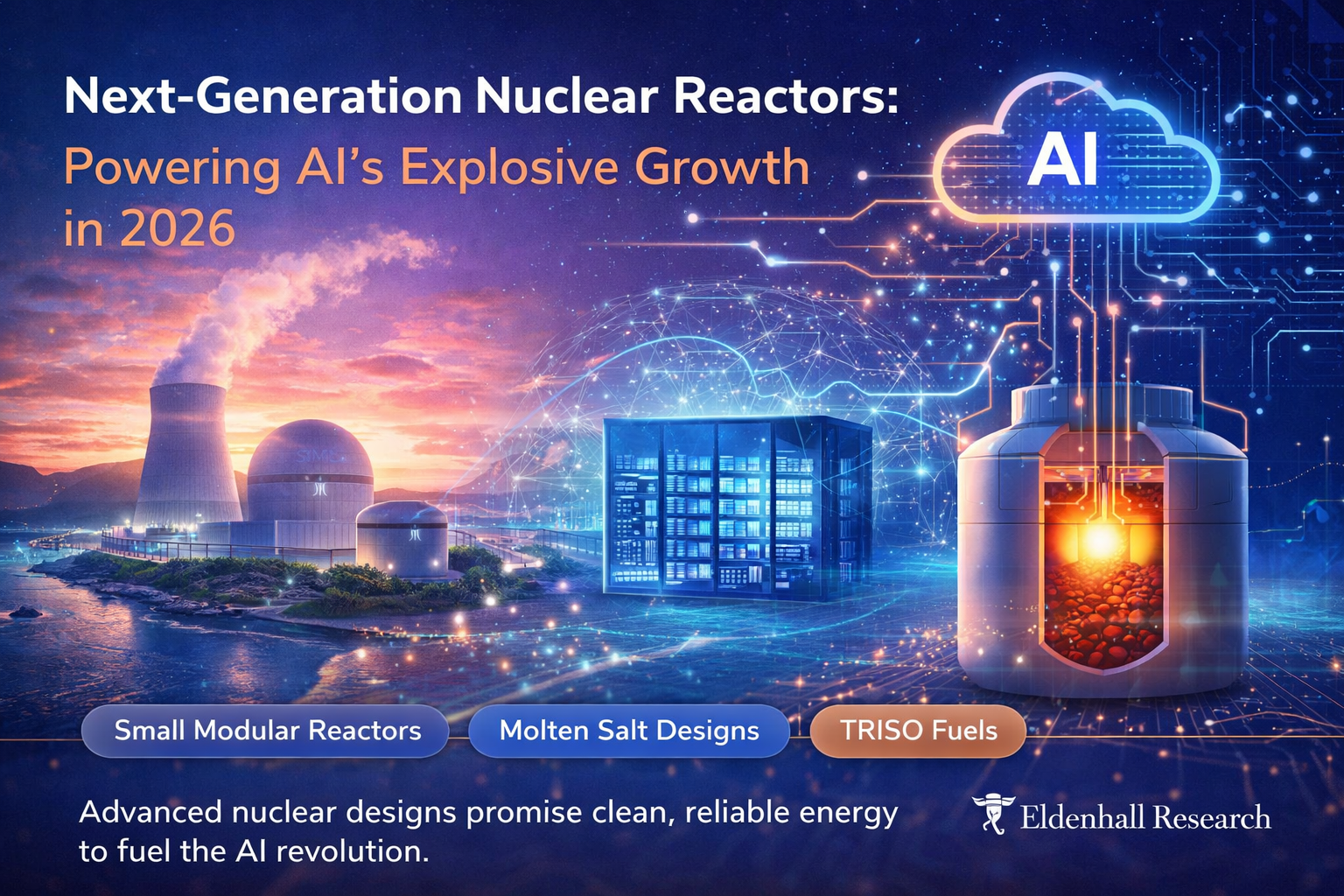
Next-Generation Nuclear Reactors: Powering AI's Explosive Growth in 2026
In this latest Eldenhall Research blog, we break down why advanced nuclear reactors have become one of the hottest topics in 2026. With AI data centers driving massive electricity demand, next-gen designs (SMRs, molten-salt reactors, TRISO fuels, and modular builds) offer the clean, always-on power needed to fuel the AI boom without compromising climate goals. We cover the current energy crunch, real 2026 milestones, practical innovations, industry impact, and honest challenges plus a forward-looking view on how this technology will accelerate AI progress for years to come. Perfect for researchers, tech leaders, and energy professionals who want a clear, no-hype update on the nuclear-AI revolution.